Why Cockroaches Become a Bigger Problem in Winter
Even though Tampa doesn’t experience freezing winters, there is still a noticeable shift in pest activity when the temperature drops. Cooler nights, lower humidity, and shifting food and water sources push cockroaches to look for more stable environments.
Inside your home, they can find:
- Consistent warmth from heating, appliances, and hot water lines.
- Moisture around sinks, bathrooms, AC closets, and laundry rooms.
- Reliable food sources in kitchens, pantries, and pet feeding areas.
All of this makes Tampa homes especially attractive to roaches during the winter months.
The Cockroaches Most Commonly Seen in Tampa During Winter
American Cockroaches (“Palmetto Bugs”)
These large roaches are commonly seen in garages, laundry rooms, and commercial buildings. They prefer warm, humid areas and often move indoors when outside temperatures dip or when their outdoor hiding spots are disturbed.
German Cockroaches
German roaches are the most common indoor species. They thrive in kitchens and bathrooms, hiding in cracks, behind appliances, and inside cabinets. They cannot survive long outdoors in cooler weather, so they rely heavily on human structures to stay warm and fed.
Smokybrown Cockroaches
Smokybrown roaches are usually found around palm trees, gutters, and soffits. When outdoor humidity drops in the dry season, they head into attics, wall voids, and rooflines in search of moisture and shelter.
Why Cockroaches Move Indoors During Tampa’s Winter Months
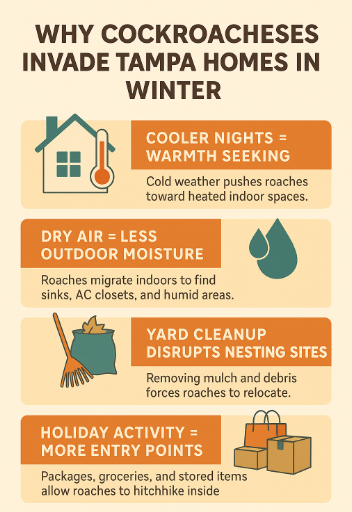
1. Cooler Nights Push Roaches Toward Warmth
Cockroaches are sensitive to temperature changes. When cold fronts move through the Bay Area, roaches leave exposed outdoor locations and gravitate toward heated, insulated spaces like walls, cabinets, and attics.
2. Dry Air Reduces Outdoor Moisture Sources
Tampa’s dry season generally runs from late fall through early spring. Puddles dry out faster, and natural water sources become less reliable. Roaches then move indoors where they can find steady moisture around sinks, dishwashers, water heaters, and AC units.
3. Winter Yard Cleanup Disrupts Nesting Sites
Raking leaves, trimming shrubs, and clearing debris are great for curb appeal—but they can also destroy cockroach hiding spots. When mulch beds, leaf piles, and wood stacks are disturbed, roaches are forced to relocate, often choosing nearby structures.
4. Holiday Activity Creates More Entry Opportunities
Winter is peak time for deliveries, grocery runs, and bringing items in and out of storage. All that movement increases the chances of roaches hitchhiking inside on cardboard boxes, used appliances, or stored decorations.
Common Entry Points for Winter Cockroaches
Cockroaches can flatten their bodies and squeeze through incredibly small spaces. In Tampa homes, the most frequent entry points include:
- Gaps beneath exterior and garage doors.
- Cracks around plumbing, cable, or AC line penetrations.
- Damaged weather stripping and door sweeps.
- Open or torn window screens and weep holes.
- Unsealed wall voids around cabinets and baseboards.
Signs You May Have a Winter Cockroach Problem
Because roaches are nocturnal, you may not see them during the day. Look for these warning signs instead:
- Live roaches when you turn on the kitchen or bathroom lights at night.
- Droppings that look like fine black pepper or coffee grounds.
- A musty, oily, or “roachy” odor in cabinets or around appliances.
- Egg cases (oothecae) behind appliances, inside cabinets, or in pantry corners.
- Smear marks along walls, baseboards, or around damp areas.
How to Prevent Cockroach Infestations During Winter
Proactive prevention makes a big difference. Tampa homeowners can reduce winter roach activity by focusing on three main areas: moisture, food, and access.
1. Reduce Moisture
- Repair leaking faucets, pipes, and refrigerator lines.
- Keep sinks and tubs dry overnight when possible.
- Clean AC drip pans and check for condensation issues.
2. Improve Food Storage and Sanitation
- Store pantry items in sealed containers instead of open boxes or bags.
- Clean up crumbs and spills right away, especially sugary or greasy foods.
- Don’t leave dirty dishes in the sink overnight.
- Store pet food in airtight containers and avoid leaving bowls out all night.
3. Seal Entry Points
- Install or replace worn door sweeps and weather stripping.
- Seal gaps around utility lines and plumbing penetrations with caulk or foam.
- Repair damaged screens and close obvious cracks in walls or foundations.
- Declutter cardboard boxes in garages and storage rooms, which can harbor roaches.
When to Call a Professional Pest Control Company
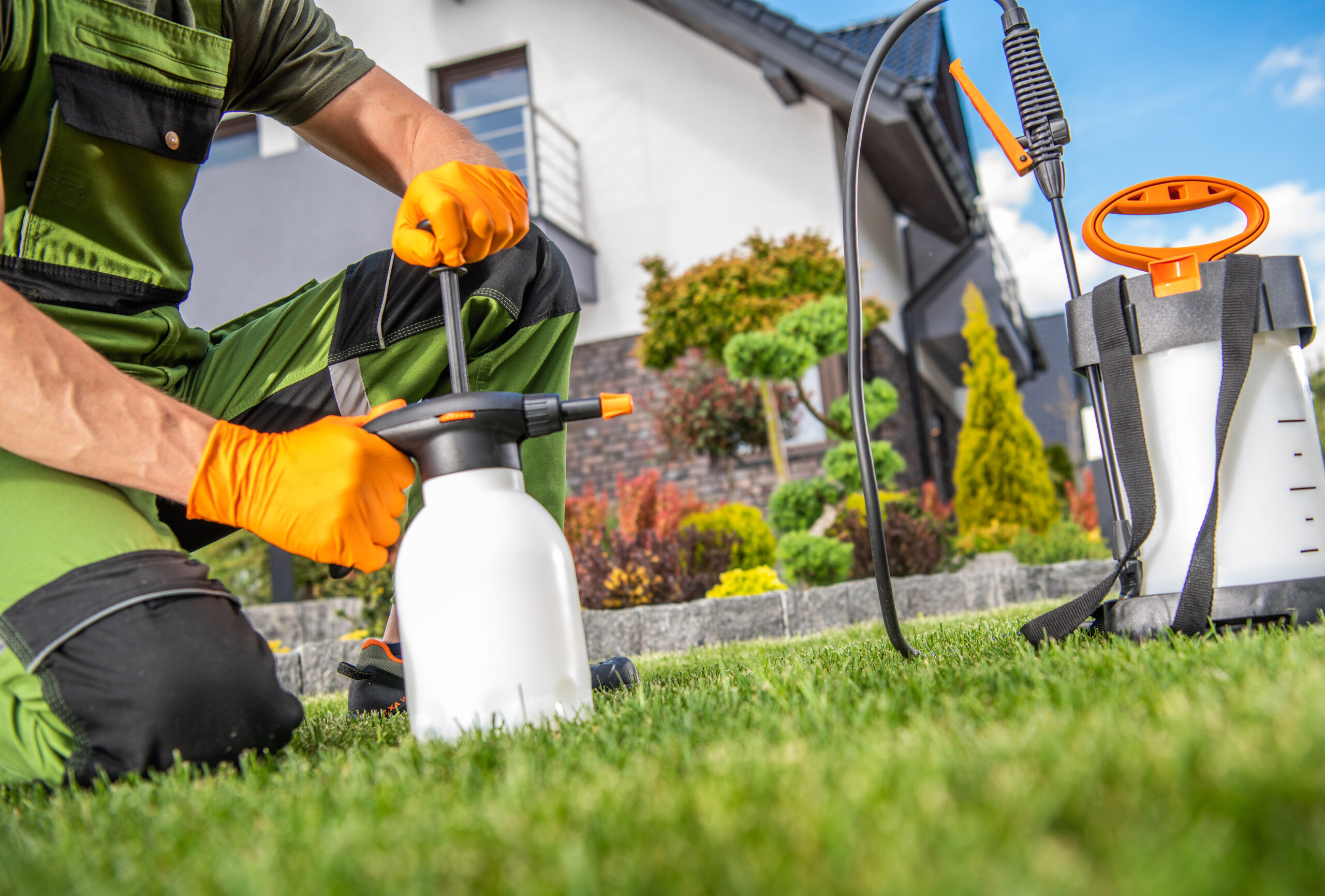
While DIY sprays and traps may help with small, isolated issues, winter cockroach infestations—especially those involving German roaches—can escalate quickly. Professional pest control companies in Tampa can provide:
- Targeted baiting and crack-and-crevice treatments.
- Use of insect growth regulators (IGRs) to disrupt breeding cycles.
- Monitoring and follow-up visits to ensure the infestation is eliminated.
- Personalized prevention plans based on your home’s layout and risk factors.
If you’re seeing roaches regularly, noticing egg cases, or smelling a persistent musty odor, it’s time to schedule an inspection.
Final Thoughts
Winter in Tampa may not be harsh, but it absolutely changes where cockroaches want to live. Cooler nights, drier air, yard cleanup, and increased holiday activity all work together to bring roaches inside.
By understanding what attracts cockroaches into your home—and taking practical steps to reduce moisture, food sources, and entry points—you can greatly reduce the risk of a winter infestation. And when roaches have already moved in, partnering with a licensed Tampa pest control professional is the fastest way to reclaim your home.